

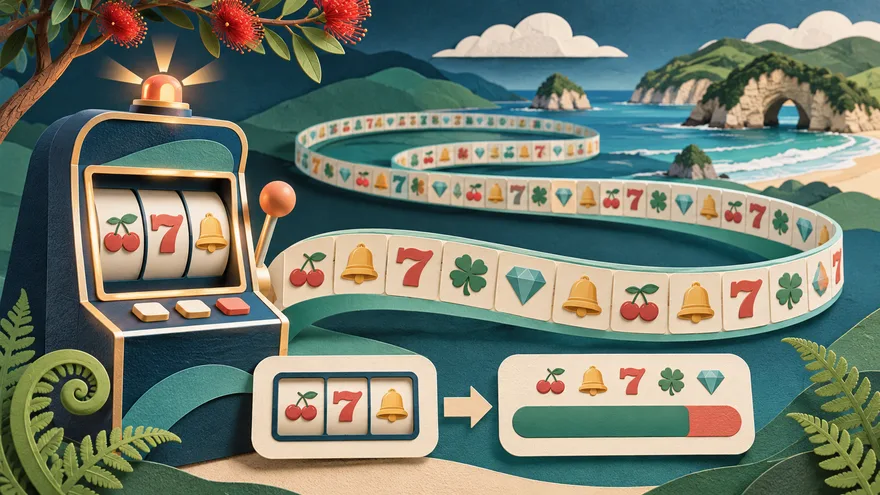
The basic relationship
If a game states 96% RTP, the theoretical house edge is 4%. Across NZ$10,000 of total stakes, the modelled long-run return would be NZ$9,600 and the modelled difference NZ$400. That is an illustration of the formula, not a promise that one player will receive those amounts.
theoretical return = total stakes × RTP
Repeatedly re-staking returned money increases total turnover. A person may deposit NZ$100 but create much more than NZ$100 in stakes during a session. RTP applies to turnover, not the original deposit.
What changes the reading
- The exact game and version running.
- Rules, optional bets and feature purchases.
- Whether the displayed figure applies to the base game and features together.
- The size of the sample: short play is dominated by variation.
- Volatility: two games with the same RTP can distribute returns very differently.
Common mistakes
“A 96% RTP means I get NZ$96 back from NZ$100.” Not in a particular session. It describes a long-run theoretical ratio across total stakes.
“The game has paid less, so it must catch up.” Random rounds do not owe a correction on the next spin.
“The highest RTP is safest.” RTP does not set a loss limit, session speed or volatility. A fast game can generate high turnover quickly.
The DIA's harm-reduction analysis describes RTP as a ratio of expected long-run return, and New Zealand regulations prohibit misleading outcome presentation. Check the information panel in the exact running version rather than a copied marketing table.
Next: volatility · paylines and ways · responsible gambling